Business Owners
Owners needed a reason to return after publishing.
Once a business created a profile, Shop Latte needed a lightweight way for owners to keep their presence active without asking them to constantly manage another platform.
2024–Present
Building Repeat Engagement
Key Insight
Block Post was designed as a fairer visibility loop for small businesses — giving owners a reason to return, customers a reason to check back, and updates a better chance of reaching people who actually care.
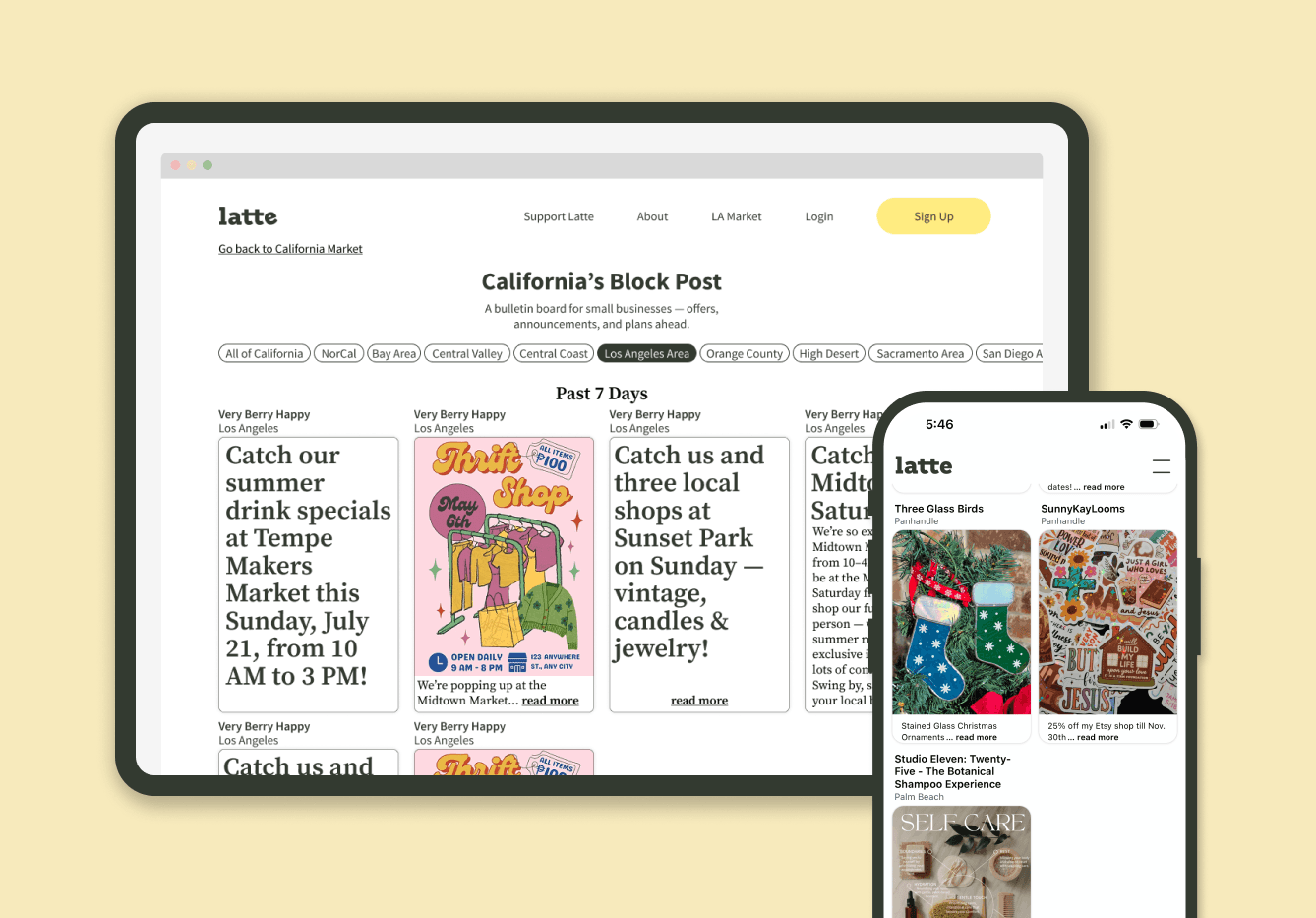
After a business published its profile, Shop Latte needed a way for owners to stay active and for customers to see what was happening locally. I designed Block Post as a lightweight community publishing system where businesses could share events, sales, launches, and updates with people browsing their community — without the pressure, noise, or randomness of a traditional social feed.
The Opportunity
Business Owners
Once a business created a profile, Shop Latte needed a lightweight way for owners to keep their presence active without asking them to constantly manage another platform.
Customers
A profile helps customers understand a business, but timely posts help them discover events, sales, launches, and updates happening in their community.
The Challenge
Small businesses already rely on social platforms where visibility can feel unpredictable, noisy, and disconnected from real customer intent. Block Post needed to give owners a reason to post while keeping the feed fair, local, and useful for customers who were actively looking for businesses, events, sales, and community updates.
Key Observation
Business owners already juggle products, customers, operations, social media, newsletters, events, and marketing. Block Post needed to create visibility without asking owners to constantly post, chase engagement, or compete for attention in another feed.
01
Small businesses are expected to post often, stay consistent, and compete for attention, even when they have limited time and resources.
02
A post may get impressions from people who are not local, not interested, or not in the mindset to support a business.
03
On Shop Latte, customers do not need to follow a business first or continuously search for updates. Timely posts can appear where people are already browsing local businesses and community activity.
Product Approach
Block Post was designed to create recurring activity without rewarding constant posting or algorithmic performance. The system used posting limits, randomized visibility, community-based browsing, and post filters to help timely updates reach higher-intent customers.
A weekly posting cadence reduced spam, lowered content pressure, and prevented one business from dominating the feed.
Posts were randomized within the 7-day window to create fairer exposure across businesses instead of ranking updates by popularity or recency alone.
Posts appeared to people browsing the business's community, making the audience more relevant than broad social views from people who may not be interested.
Post types such as community, event, and sale helped customers focus on the updates they cared about, from local events to ways to meet small businesses in person.
How It Works
Block Post was designed to be lightweight: businesses create a short update, the post appears in local discovery, and customers can use it as a path into the business profile.
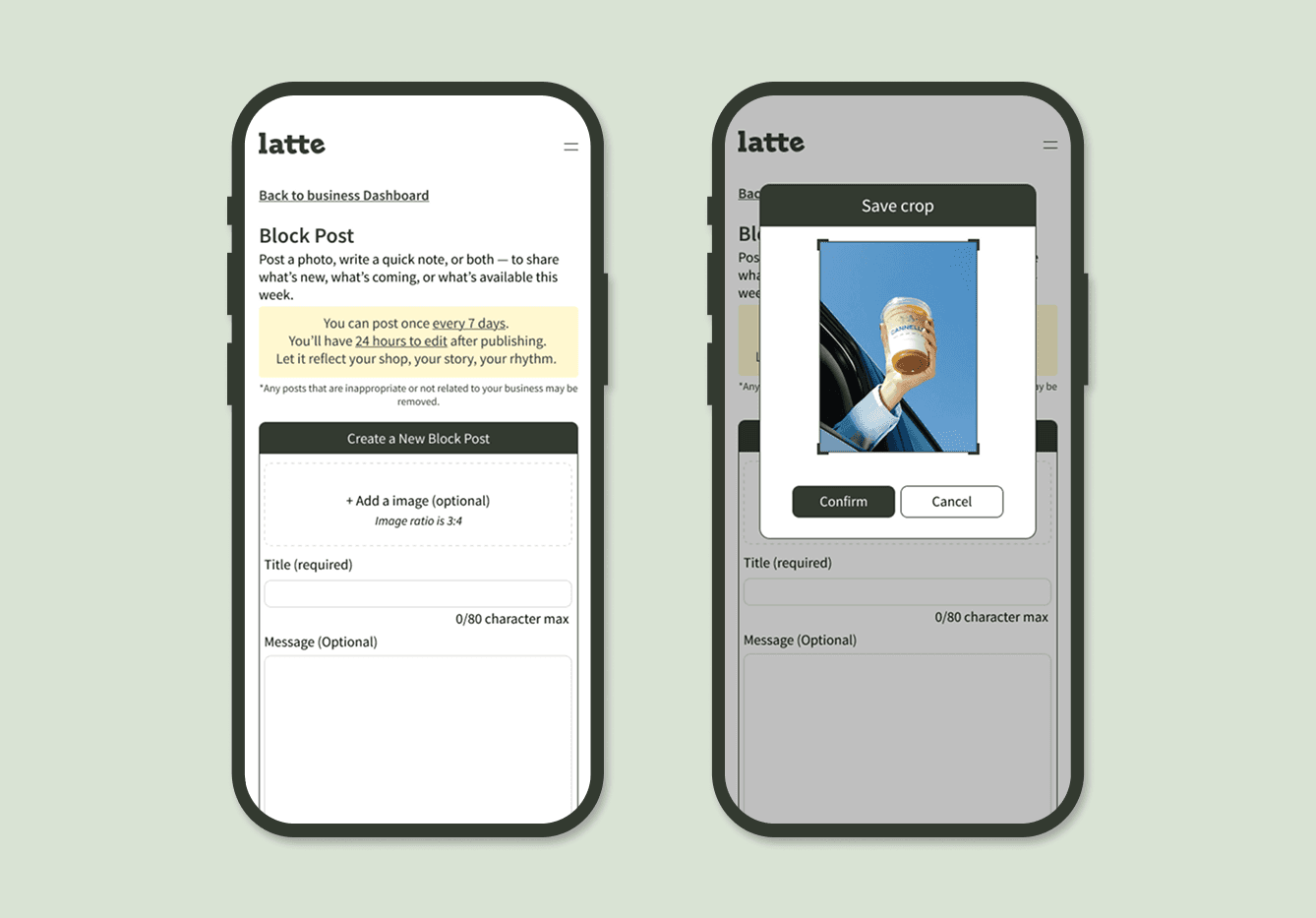
Owners create a short post for an event, sale, launch, announcement, or community update.
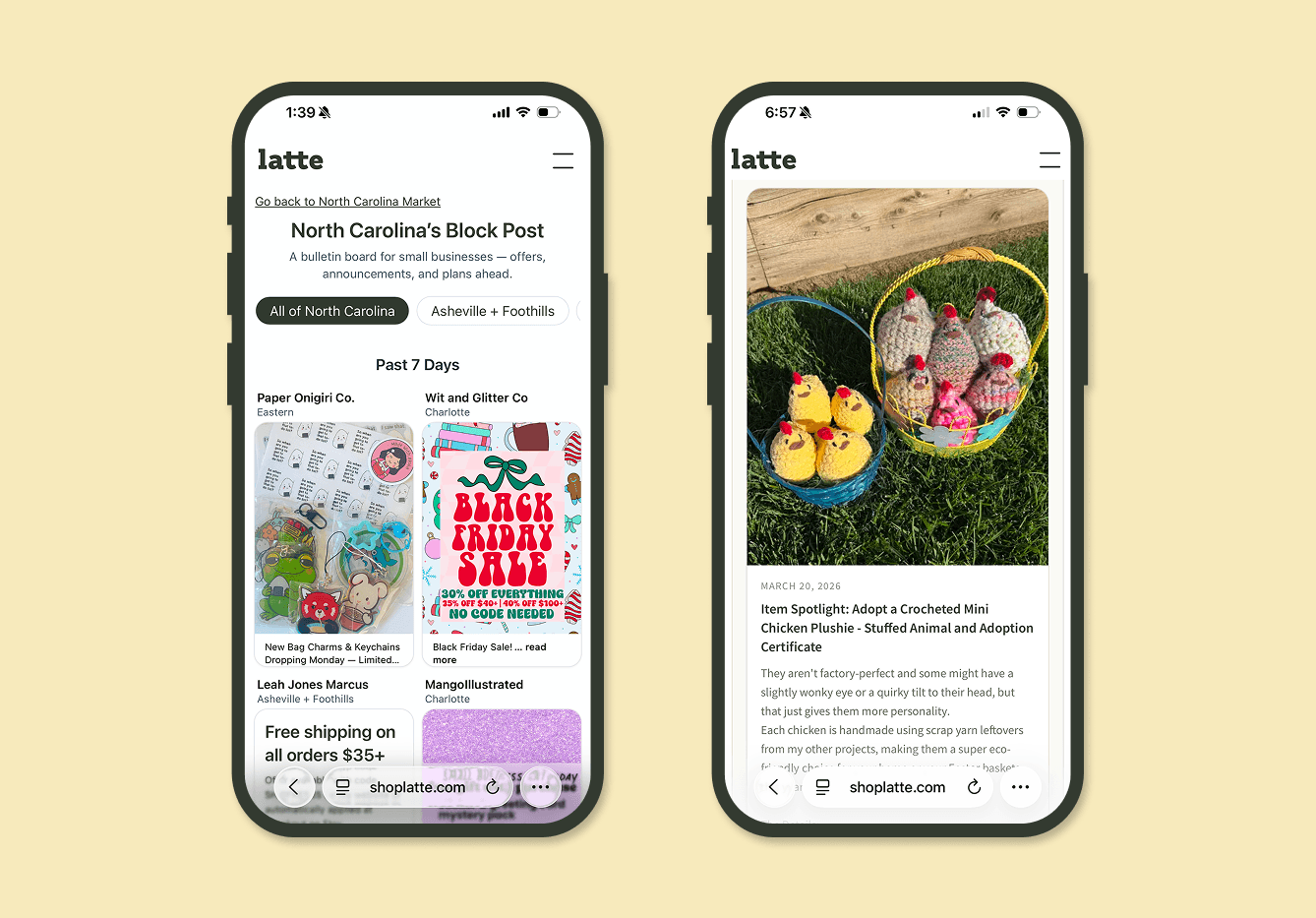
Updates appear within a randomized 7-day window so one business does not dominate the local feed.
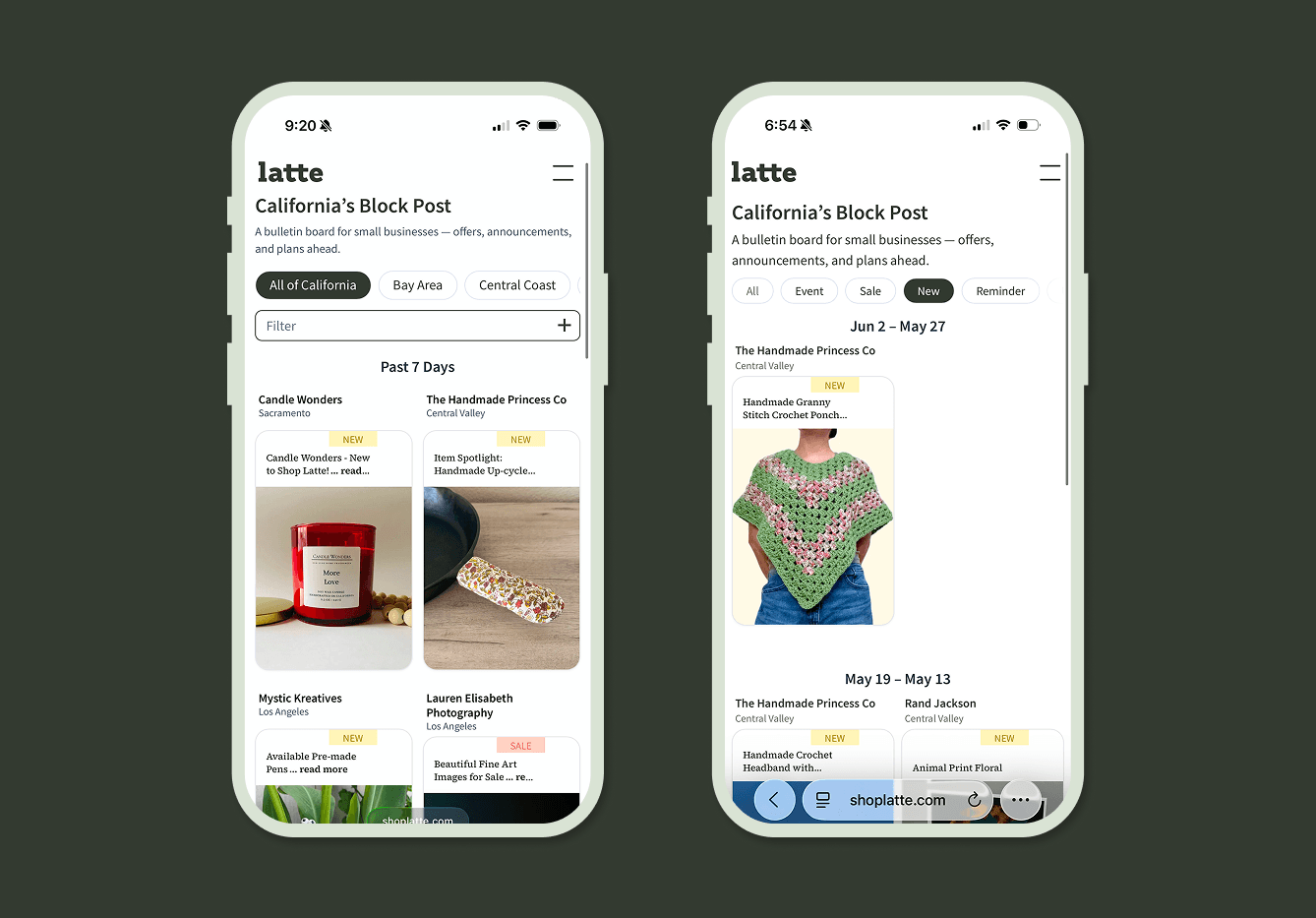
Customers can filter for sales, events, and community updates to find timely ways to support small businesses.
Platform Benefits
Block Post gave small businesses a way to stay visible without relying on followers, algorithms, or constant posting. Instead of asking owners to chase attention, updates appeared in a local discovery context where customers were already looking for businesses, events, sales, and community activity.
A weekly posting limit gave businesses a simple reason to return without making visibility depend on constant content creation.
Posts reached people browsing a business's community, making the audience more aligned than broad social media views from people who may not be local or interested.
Randomized posts within a 7-day window helped prevent one business from dominating the feed while giving customers a rotating view of local activity.
Impact
The feature gave Shop Latte a lightweight engagement loop that worked differently from social media. Businesses could share timely updates at a manageable pace, while customers could discover local activity without needing to follow every business or search across multiple platforms.
After publishing a profile, businesses had a clear next action: share what was happening now. This helped Shop Latte support ongoing participation without relying only on profile edits.
Posts appeared in a local discovery context where customers were already looking for small businesses, events, sales, and community updates — not in a broad feed where attention may be random or low-intent.
A weekly cadence, randomized visibility, and post filters helped keep the feed useful, rotating, and easier to browse by customer intent.
Reflection
This project helped me think about retention with more restraint. Small businesses already have enough places demanding constant updates, so the goal was not to make them post more. It was to make the updates they already had easier to share with people who were more likely to care.